Since ’66
60 Years.
Fame built on purpose, not luck. Diamonds, wildlife and now sport prove Botswana knows exactly what it stands for.
A discipline, not an accident.
In 1966, Botswana was one of the poorest countries on earth. Sixty years on, it is known worldwide for the right reasons. That reputation was built decision by decision.
Diamonds became a partnership that kept half the value at home. Wildlife became a destination people plan years ahead to see. This year, on home soil, sport did it again.
Three fields, one identical discipline: know exactly what you are known for, and keep proving it. That is brand strategy, practised at national scale for sixty years.
Six presidents · One Story
Sixty years, six stewards.
Each brought a different priority to the same discipline: building a national reputation that lasts.
 “A nation without a past is a lost nation, and a people without a past are a people without a soul.”
Secured the 1969 Debswana partnership, keeping half of diamond value at home.
 “The future of our country is paramount. We need visionary people on the future of the country, not those who want to create a name only for themselves.”
Presided over one of the world’s fastest growing economies, the Botswana miracle.
 “I will sack them if they can’t work together to advance the cause of the country.”
Confronted HIV/AIDS head on: the first African country offering free antiretroviral treatment.
 “The shooting of wild game purely for sport and trophies is no longer compatible with our commitment to preserve local fauna as a national treasure, which should be treated as such.”
Championed conservation led, high value, low volume tourism.
 “Funds raised from diamonds have not just built our roads, but also our people.”
Pushed economic diversification beyond diamonds.
 “I pledge with every fiber of my being that I will do everything I can, not to fail, not to disappoint, appreciating always the enormity of the responsibility bestowed upon me by the people of this republic.”
Delivered Botswana’s first peaceful change of governing party since independence.
The marks
Sixty years, forty two marks.
Before the clock. Three chiefs sailed to London and kept the country its own. Everything below stands on that journey.
- 1964
A capital from nothing. Building starts at Gaborone. The administration had been run from Mafikeng, inside South Africa; the framework of a new capital goes up in three years.

- 1965
The voice. Radio Bechuanaland begins broadcasting. On 30 September 1966 it takes the country’s name and becomes Radio Botswana.

- 1965
The Meat Commission. The Botswana Meat Commission is created by Act of Parliament, working from the Lobatse abattoir. Through the first years of independence, beef is the only foreign exchange the country earns.

- 1966
Independence. 22 graduates, 12 km of tarred road, one of the three poorest countries on earth.

- 1966
The older institution. Raised by the British in 1884 as the Bechuanaland Mounted Police, about a hundred European men. Border Police in 1885, Protectorate Police in 1902, and at independence, the Botswana Police Force.

- 1966
The constitution. Bechuanaland adopts a constitution built largely on the Westminster model, with one feature imported from elsewhere: an executive presidency.

- 1967
Diamonds at Orapa. The Mines and Minerals Act puts every stone under national ownership.

- 1969
The partnership. The De Beers deal is signed, and negotiated to an equal share by 1975.

- 1970
The power. An Act of Parliament creates the Botswana Power Corporation. The coal to run it comes from Morupule, opened the next year to feed the copper mine at Selebi-Phikwe.

- 1971
The pit opens. Orapa starts producing, four years after the Act that put the stones under national ownership. It is the largest open pit diamond mine in the world by area.

- 1973
The copper bet. BCL opens at Selebi-Phikwe, the first wager beyond diamonds. It ran for forty three years and built a town that outlived it.

- 1974
The first women. The third Parliament sits. Until then every member of the National Assembly had been a man.

- 1975
The bank. The Bank of Botswana opens on 1 July, a year after the country announces it is leaving the Rand Monetary Area. The Pula follows the next year.

- 1976
Motho le Motho Kgomo. A university paid for in cattle, sorghum and pocket change.

- 1976
Pula Day. On 23 August the country leaves the Rand Monetary Area and issues its own money, replacing the rand at par. Pula means rain.

- 1977
The BDF. A defence force founded from 132 cadres.

- 1980
The lines. An Act of Parliament creates BTC to build and run the country’s own national and international network. It held the monopoly until 1996.

- 1982
The richest of them. Jwaneng reaches full production in July and Masire opens it in August. It is the richest diamond mine on earth by value.

- 1987
Botswana Railways. The state takes over the running of its own 641 km line.

- 1989
The runners. BotswanaPost is incorporated, nine years after the telephone lines split away. The service it inherits began in 1875, when pairs of runners carried mail on foot between Bulawayo and Mafikeng.

- 1998
The first call. President Masire dials the future to launch the mobile network.

- 1999
Miss Universe. Mpule Kwelagobe becomes the first Motswana to hold a world title.

- 2000
The picture. Botswana Television goes on air on 31 July, thirty five years after the radio and the first station in Africa built to run entirely on digital equipment.

- 2000
The final. Glody Dube runs the Olympic 800m final in Sydney. No medal. He won the belief.

- 2002
MASA. The first country in Africa with free universal HIV treatment.

- 2003
The professional. Dipsy Selolwane becomes the first Motswana in Major League Soccer.

- 2008
The prize. Festus Mogae wins the Mo Ibrahim Prize for leadership.

- 2011
The gold. Amantle Montsho beats Allyson Felix in Daegu, the nation’s first World Champion.

- 2012
The medal. Nijel Amos takes Olympic silver in London.

- 2012
The Zebras arrive. Botswana top a group containing Tunisia and Togo to reach a first Africa Cup of Nations. Five wins, two draws, and the single defeat came after qualification was already secured.

- 2013
The trade moves. De Beers shifts its rough diamond sales from London to Gaborone, taking the sorting, valuing and selling of its global production with it.

- 2014
The 1000th. The Okavango Delta becomes UNESCO’s 1000th World Heritage Site.

- 2017
Alone in the rain. Barred from his final, Isaac Makwala runs a solo time trial, and the world stands up.

- 2023
The new deal. Heads of terms with De Beers, agreed on the anniversary of independence. Ten years of sales and twenty five more years of mining, and the state’s own company takes thirty per cent of Debswana’s production, rising to forty, and to half if the deal runs its course.

- 2024
The Olympic gold. Letsile Tebogo wins the 200m in Paris in 19.46, an African record and Botswana’s first Olympic gold.

- 2024
The dunes. Ross Branch wins the World Rally-Raid Championship, the first African rider to take the title.

- 2024
The handover. The first peaceful change of governing party since independence.

- 2025
The signature. Bogolo Kenewendo, the minister of minerals and energy, signs for Botswana in February. A billion pula opens a Diamonds for Development Fund, and the deal brings a jewellery works, a grading laboratory and a training institute with it.

- 2025
The return. The Zebras qualify for AFCON again after twelve years away.

- 2026
The new diamonds. All fifteen rare earths verified at Gcwihaba, 20 to 50 metres down. The next seam opens.

- 2026
The grass court. Ntungamili Raguin reaches junior Wimbledon.

- 2026
The sixtieth year. The quartet stops the clock at 2:54.47.

The ground · 1967 to 1975
A resource turned trust
Three years after independence, Botswana negotiated Debswana and kept half its diamond value at home. The reputation for fair dealing it built still holds.

The land · 2014
Protection became the brand
In 2014 the Okavango Delta became UNESCO’s 1000th World Heritage Site. Botswana chose protection over volume, and people now save for years to see it.

The people · 1976 to 2002
A university paid for in cattle
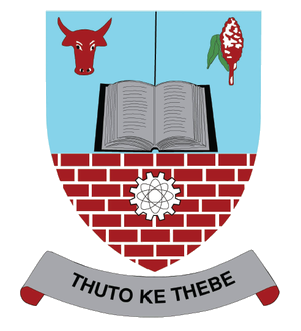
Motho le Motho Kgomo: cattle walked for miles, sorghum, pocket change. The University of Botswana wears a cow on its crest to this day. The same instinct later made MASA possible.

The pioneers
They ran alone first
- K.T. Motsete Wrote the words and music of the anthem, 1962.
- Mpule Kwelagobe Miss Universe 1999, the first world title.
- Glody Dube First Motswana in an Olympic final, Sydney 2000.
- Dipsy Selolwane First Motswana in Major League Soccer, 2003.
- Amantle Montsho First World Champion, Daegu 2011.
- Stanley Tshosane Coached the Zebras to their first AFCON, 2012.
- Nijel Amos First Olympic medal, silver in London 2012.
- Alister Walker World No. 12 in squash, first All-Africa gold 2013.
- Isaac Makwala Ran alone in the rain, London 2017.
- Letsile Tebogo Botswana’s first Olympic gold, 200m in Paris, 2024.
- Ross Branch First African World Rally-Raid champion, 2024.


Khama III, Sebele I and Bathoen I went alone in 1895 to keep the Protectorate out of the Company. Eleven firsts walk in their steps. Choose a name to meet one.
The mark · 2026
The mark reads like the record.
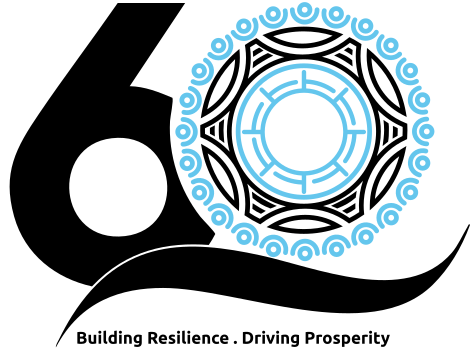
This year Botswana gave its sixtieth a mark of its own. Read it closely and it argues the same case this page has been making. Three layers, a numeral and a stroke, and every one of them stands for a decision the country has already spent six decades proving.
Shown whole, as issued. A numeral, a medallion built in three layers, and a stroke carrying both. Every reading that follows zooms to one of them.
Repeating circular forms, every Motswana distinct and connected at once. Unity, botho, shared responsibility, and a development story with people at the centre of it.
Taken from traditional basket patterns. Indigenous knowledge, craftsmanship and generational wisdom, and the way separate communities are held as one national identity.
Modern in its construction, and deliberately so. Industry as the engine of what comes next, sitting inside the culture rather than replacing it.
Six decades of independence, stated plainly. No ornament, no explanation asked for.
Momentum, held in a single gesture. The ambition to keep going through innovation rather than to mark an anniversary and stop.
None of that is decoration. Every element answers the question a brand has to answer: what are we known for, and what proves it. A country that can hold one answer for sixty years can put it in a mark this confidently. These readings follow the official BOTS60 logo guidelines.
The anchor leg · 2026
2:54.47Read the full story of the race that made history in Gaborone, on home soil.
Imagine what your brand could do with one.
Botswana built this reputation across six decades and six presidents without hiring an agency. Consistent decisions about what it stands for. That discipline is learnable.
Brandesis brings that discipline to businesses: know exactly what you stand for, and prove it in everything you do. If a country can do it alone, imagine your brand with a partner.